Travel restrictions extended until November 2026 amid ongoing Ebola crisis
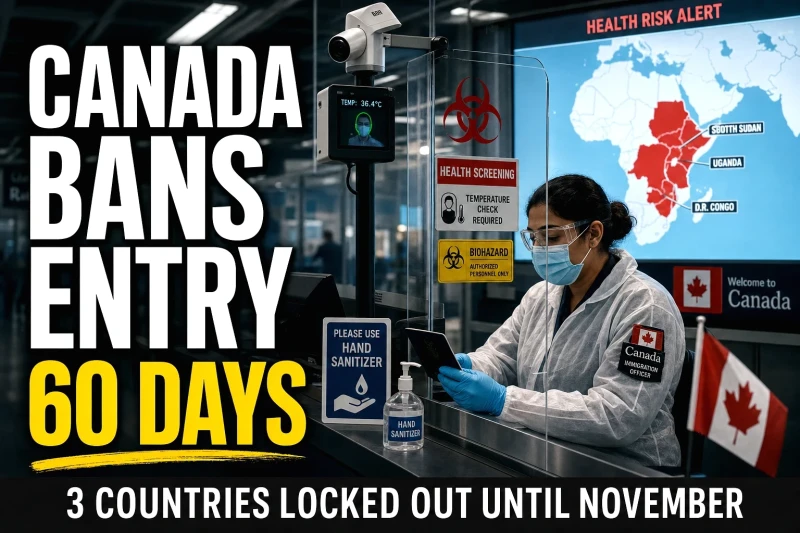
Canada's Immigration, Refugees and Citizenship Canada (IRCC) has extended its temporary immigration measures for 60 days, until November 27, 2026, in response to the ongoing Ebola outbreak in Central Africa. This announcement was made on September 28, 2026.
Countries Affected
Canada remains deeply concerned about the ongoing Ebola outbreak in the Democratic Republic of Congo and the evolving risk of Ebola disease in neighbouring countries, including Uganda and South Sudan.
Travel Restrictions
Immigration documents remain suspended for residents of countries with a high or very high risk of Ebola disease outbreak, including the Democratic Republic of Congo, Uganda and South Sudan, and people whose last country of residence at the time of their application was one of these countries cannot travel to Canada at this time.
This applies even if they have a previously approved visa, permit or electronic travel authorization.
Outbreak Statistics
As of September 26, a total of 8,067 confirmed Ebola cases, including 3,901 related deaths, had been recorded in the DR Congo alone.
No new cases were detected in Uganda or South Sudan, although their proximity to the DR Congo places them among the countries considered at high risk of transmission.
Additional Border Measures
As of July 20, 2026, any foreign national who was in the Democratic Republic of the Congo within the past 21 days is prohibited from entering Canada.
Canadian citizens, permanent residents, and persons registered under the Indian Act entering Canada who have been in these countries within the previous 21 days will continue to be able to travel to Canada, will receive a health assessment upon arrival and be required to quarantine on arrival for 21 days.
Timeline
These measures are in place as of 23:59:59 ET on May 27, 2026, and will end at 23:59:59 ET on November 27, 2026. Canada first introduced these travel restrictions in May 2026 following a new wave of Ebola outbreak.