
The extended FMCSP program offers francophone students from Africa, the Middle East, and the Americas a direct pathway to permanent residence after completing two years of French-language study at participating Canadian institutions outside Quebec
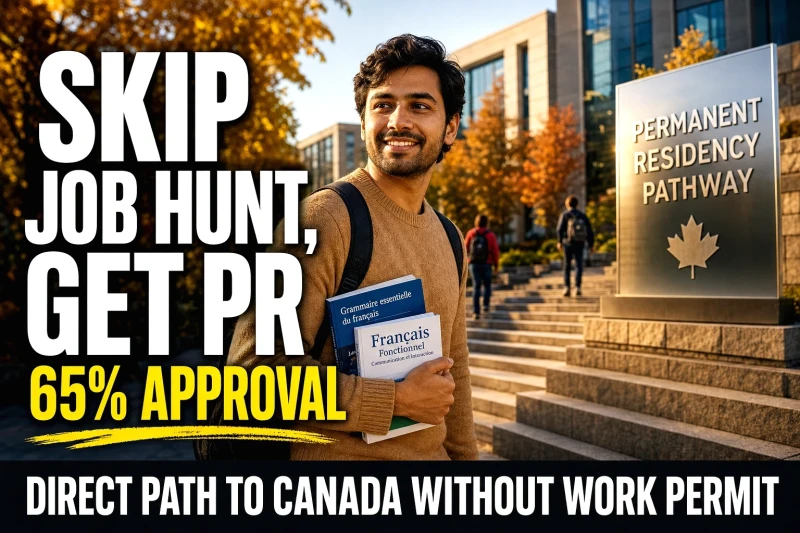
On This Page You Will Find:
- How the newly extended FMCSP program offers you a direct path to Canadian permanent residence without a job offer
- The exact eligibility requirements and which 17 institutions accept FMCSP applications
- Why your approval odds jumped from 34% to 65% with this special pilot program
- How to bypass the Provincial Attestation Letter requirement that blocks most international students
- Critical application deadlines and intake caps you need to know for 2026-2027
Summary:
Imagine skipping the usual post-graduation work permit scramble and heading straight to permanent residence instead. The Francophone Minority Communities Student Pilot (FMCSP) makes this possible for French-speaking students from Africa, the Middle East, and the Americas. Recently extended through August 2027, this under-the-radar program accepts 2,970 applications annually and boasts a 65% approval rate—nearly double the standard rate for students from eligible regions. You'll study in French outside Quebec, complete a two-year credential at one of 17 participating institutions, and transition directly to PR status. Even better? You don't need the Provincial Attestation Letter that's currently blocking thousands of other international students. If you're francophone and dreaming of Canadian residency, this might be your golden ticket.
🔑 Key Takeaways:
- FMCSP extends through August 2027 with 2,970 study permit spots available annually—no Provincial Attestation Letter required
- Approval rates hit 65% for FMCSP applicants versus just 34-39% for standard applications from the same countries
- You need NCLC 5 French proficiency, acceptance from one of 17 participating institutions, and a two-year full-time program taught mostly in French
- The program offers a direct pathway to permanent residence after graduation without requiring a job offer
- Some institutions have already closed undergraduate applications for Fall 2026, making early planning essential for future intakes
The Study-to-PR Pathway Most Students Don't Know About
Sarah Kamara spent six months researching Canadian immigration pathways from her home in Senegal. She'd heard about Express Entry, Provincial Nominee Programs, and the Canadian Experience Class—all requiring years of Canadian work experience before even applying for permanent residence. Then a university advisor mentioned something different: a pilot program specifically designed for French-speaking students that would let her apply for PR immediately after graduation.
"Wait," she remembers thinking. "No job offer required? No years of waiting?"
The Francophone Minority Communities Student Pilot represents exactly what Sarah discovered—a fundamentally different approach to Canadian immigration. While most international students face a long journey (study, then work permit, then gain experience, then apply for PR), FMCSP participants get a streamlined route that recognizes their French language skills as a national priority.
Here's why this matters to you: Canada desperately wants to strengthen French-speaking communities outside Quebec. The federal government isn't just accepting French-speaking immigrants—they're actively creating special pathways to attract them. That's where your opportunity lies.
What Makes FMCSP Different From Regular Study Permits
Let's talk about the Provincial Attestation Letter situation first, because it's probably the biggest headache facing international students right now.
Since 2024, most international students need a PAL from their destination province before Immigration, Refugees and Citizenship Canada (IRCC) will even process their study permit application. Provinces control these letters, issue limited numbers, and the competition is fierce. Many qualified students get blocked at this stage before their application even reaches federal immigration officers.
FMCSP participants? Completely exempt.
You read that right. If you qualify for the Francophone Minority Communities Student Pilot and receive acceptance from one of the participating institutions, you submit your study permit application directly to IRCC without any provincial attestation letter. This removes an entire barrier from your path.
But the advantages don't stop there. Check out how FMCSP compares to the standard international student experience:
| Feature | Standard Study Permit | FMCSP Study Permit |
|---|---|---|
| Provincial Attestation Letter | Required | Not required |
| Approval rate (eligible countries) | 34-39% | 65% |
| Post-graduation pathway to PR | Must gain work experience first | Direct pathway available |
| Job offer requirement for PR | Yes (for most pathways) | No |
| Program duration | No minimum | Minimum 2 years |
| Language of instruction | Any | Minimum 50% French |
That 65% approval rate deserves special attention. For context, students from Africa and the Middle East historically faced 34% approval rates, while those from the Americas saw 39% approval. FMCSP nearly doubles your chances of actually receiving that study permit.
Who Qualifies for This Program (And Who Doesn't)
The FMCSP targets a specific group: French-speaking international students from designated countries who want to build their lives in francophone communities outside Quebec.
Let me break down each eligibility requirement so you know exactly where you stand:
Geographic eligibility: You must be a citizen of a designated country in Africa, the Middle East, or the Americas. IRCC hasn't published an exhaustive list publicly, but the program specifically targets regions where French is widely spoken or studied. If you're from Morocco, Tunisia, Algeria, Senegal, Cameroon, Côte d'Ivoire, Haiti, Lebanon, or similar francophone or French-learning nations, you're likely eligible. (Contact participating institutions directly to confirm your country's status—they'll know definitively.)
Language proficiency: You need to demonstrate NCLC 5 (Niveaux de compétence linguistique canadiens) in all four French language abilities: reading, writing, speaking, and listening. This roughly equals a B1 level on the European framework—intermediate proficiency where you can handle most everyday situations and understand main points of clear standard speech. You'll need test results from an approved testing agency like TEF Canada or TCF Canada.
Program requirements: Your studies must meet these specific criteria:
- Full-time enrollment (not part-time)
- Minimum two-year duration at the post-secondary level
- Over 50% of instruction delivered in French
- Lead to a diploma or degree (not just a certificate)
- Offered by one of the 17 participating designated learning institutions
Financial capacity: You must prove sufficient funds to cover tuition fees and living expenses for yourself (and any family members accompanying you). IRCC doesn't specify exact amounts in the pilot description, but expect to demonstrate at least CAD $10,000 per year beyond tuition for living expenses, plus additional amounts for dependents.
Study location: Here's one crucial restriction—you cannot study in Quebec. The FMCSP specifically supports francophone minority communities, meaning French-speaking populations outside Quebec. Your participating institution must be located in another province or territory.
The 17 Institutions That Hold Your Golden Ticket
Not every Canadian college or university participates in FMCSP. Only 17 designated learning institutions currently offer the program, though IRCC has indicated additional institutions may join in the future.
When you receive your letter of acceptance from a participating DLI, it will bear a special FMCSP code. This code is your ticket to the streamlined study permit process and eventual PR pathway. Without that specific code on your acceptance letter, you're applying through regular channels instead.
The participating institutions span multiple provinces, giving you options for different climates, urban versus rural settings, and program specializations. They include universities, colleges, and post-secondary institutions that have committed to delivering quality French-language education and supporting francophone community development.
Pro tip: Contact institutions directly about their FMCSP offerings rather than relying solely on general admissions information. Ask specifically: "Do you participate in the Francophone Minority Communities Student Pilot, and which programs qualify?" Some institutions may only offer FMCSP codes for certain programs, not their entire catalog.
Also ask about their track record with FMCSP students. How many have they admitted? What support services do they offer for francophone international students? What's the francophone community like on campus and in the surrounding area? These questions reveal whether an institution truly embraces the program or just participates nominally.
Application Caps and Timeline: Why Timing Matters
Here's where strategy becomes critical. The federal government doesn't accept unlimited FMCSP applications—they've set firm annual caps.
Current intake limits:
| Intake Period | Maximum Applications |
|---|---|
| August 26, 2025 – August 25, 2026 | 2,970 |
| August 26, 2026 – August 25, 2027 | 2,970 |
These 2,970 spots represent the total number of study permit applications IRCC will accept for processing each year under FMCSP. Once the cap is reached, no additional applications will be processed until the next intake period begins.
Notice something important? These caps run on an August-to-August cycle, not a calendar year. If you're planning for a September intake (the standard fall semester start), you're competing for spots from the allocation that began the previous August.
The extension through August 2027 represents a third year of the pilot program. Originally, FMCSP was scheduled to close on August 25, 2026. The government's decision to extend it another year signals strong support for the program and its objectives—good news if you're in the planning stages.
However, some participating institutions have already closed their undergraduate FMCSP applications for Fall 2026 intake. Their advisories suggest checking back later for updates on future intakes, which means you're now looking at 2027 start dates at those schools.
What this means for you: Start your research and application process 12-18 months before your intended study start date. French language testing, credential evaluation, securing acceptance letters, and preparing financial documentation all take time. Given the annual caps, you don't want to miss your window because you started too late.
The Money Question: What This Actually Costs
Let's talk about the financial reality, because "sufficient funds" is vague and anxiety-inducing if you're trying to budget.
While FMCSP doesn't charge special program fees beyond standard study permit costs, you still need to prove you can afford Canadian post-secondary education. Here's what you're looking at:
Tuition fees: International student tuition at participating institutions typically ranges from CAD $14,000 to $28,000 annually, depending on the institution type (college versus university) and program. Professional programs like engineering or business often cost more than arts or humanities.
Living expenses: IRCC generally expects international students to demonstrate at least CAD $10,000 per year for living expenses (or CAD $833 per month) beyond tuition. If you're studying in expensive cities like Toronto or Vancouver, budget significantly more—realistically CAD $15,000-$20,000 annually for rent, food, transportation, and other necessities.
Study permit processing fee: CAD $150 for the study permit application itself.
Biometrics fee: CAD $85 for fingerprints and photo.
Medical exam: Approximately CAD $200-$450, depending on the panel physician.
French language testing: TEF Canada costs around CAD $400-$450 for all four components; TCF Canada runs similar amounts.
For a two-year program, you're looking at a total investment of roughly CAD $50,000-$80,000 depending on your program, institution, and lifestyle. That's substantial, but remember—you're not just buying an education. You're buying a direct pathway to permanent residence in a G7 country, which has enormous long-term value.
Financial proof tips: IRCC accepts various forms of financial documentation: bank statements showing funds available for at least the first year, guaranteed investment certificates, proof of scholarship or funding from your institution, or a letter from someone providing you financial support along with proof of their funds. The money doesn't need to be in your personal account, but you need to prove it's accessible for your education and living expenses.
How the PR Pathway Actually Works After Graduation
Here's where FMCSP improve from "interesting study option" to "life-changing immigration strategy."
Traditional international students in Canada follow this path: complete studies, apply for a Post-Graduation Work Permit (PGWP), work in Canada for one to three years to gain "Canadian experience," then apply for permanent residence through Express Entry or a Provincial Nominee Program. The entire journey takes 4-6 years minimum from first arriving as a student to receiving PR status.
FMCSP participants get a fundamentally different route. The program description explicitly states it "offers French-speaking international students a direct pathway to permanent residence after completing a Canadian credential."
While IRCC hasn't published every detail of the post-graduation PR process (the pilot is still relatively new), the key advantage is clear: you can transition to permanent residence soon after graduation without the typical requirement to gain years of Canadian work experience first. No job offer needed. No waiting to accumulate sufficient Comprehensive Ranking System points in the Express Entry pool.
This matters enormously if you're planning your future. Instead of the uncertainty of "I'll study in Canada, then try to find an employer willing to support my work permit, then hope I qualify for PR eventually," you have a clearer roadmap: "I'll complete my FMCSP program, then transition to PR through the established pathway."
Important caveat: You still need to meet all standard PR admissibility requirements. That means passing medical exams, security screenings, and demonstrating you're not inadmissible for criminal or other reasons. The FMCSP pathway makes you eligible for a direct PR route—it doesn't guarantee approval if you have admissibility issues.
Common Mistakes That Sink FMCSP Applications
After reviewing the program details and approval rates, I've identified several critical errors that applicants make. Avoid these and you'll dramatically improve your chances:
Mistake #1: Applying to non-participating institutions. This sounds obvious, but some applicants get accepted to excellent French-language programs at Canadian institutions that don't participate in FMCSP. Without that special code on your acceptance letter, you're stuck applying through regular study permit channels—PAL requirement included. Always verify an institution's participation before investing time and money in their application process.
Mistake #2: Underestimating the language requirement. NCLC 5 in all four abilities means you cannot have one strong skill (say, reading) compensating for a weaker one (speaking). You need to meet the threshold in reading AND writing AND speaking AND listening. If your French is rusty in any area, invest in preparation before taking the official test. Failed language tests delay your timeline and cost money to retake.
Mistake #3: Choosing programs under two years. Some excellent one-year graduate certificates or accelerated programs won't qualify for FMCSP because they don't meet the minimum two-year duration requirement. If you're choosing between a 16-month and a 24-month program, the 24-month option is your only FMCSP-eligible choice.
Mistake #4: Insufficient financial documentation. "I'll figure out funding later" doesn't work with Canadian study permits. You need to prove financial capacity upfront. Vague bank statements, unexplained sudden deposits, or borrowed money that must be repaid quickly will raise red flags. Your financial documentation should show stable, accessible funds sufficient for your entire first year at minimum.
Mistake #5: Missing the French instruction threshold. Your program must deliver over 50% of instruction in French—not 40%, not 45%, not "mostly French with some English." If you're looking at bilingual programs, confirm with the institution that French instruction exceeds 50% and that they'll issue the FMCSP code for that particular program.
Mistake #6: Applying too late in the intake cycle. Remember those 2,970 annual caps? IRCC accepts applications on a first-come, first-served basis until the cap is reached. Waiting until July to apply for a September start might mean you're too late even if you're fully qualified. Early preparation and submission protect your spot.
What Happens If You're Not Accepted
Let's be realistic—even with a 65% approval rate, one-third of FMCSP applicants receive refusals. What then?
First, understand why. Common refusal reasons for study permits include:
- Visa officer not convinced you'll leave Canada after your studies (yes, even though FMCSP offers a PR pathway, you still need to demonstrate ties to your home country initially)
- Insufficient financial resources
- Incomplete documentation
- Concerns about your academic preparedness or ability to succeed in the program
- Previous immigration violations or misrepresentation
If you're refused, you have options:
Option 1: Address the refusal reasons and reapply. Study permit refusals include the officer's reasons. If they questioned your finances, strengthen your financial documentation. If they doubted your intent, provide better evidence of ties to your home country and your genuine interest in the specific program. You can reapply as many times as needed (within the annual cap limits).
Option 2: Request reconsideration. In some cases, you can request that IRCC reconsider their decision if you believe they overlooked important information or made an error. This isn't an appeal process (study permit refusals can't be appealed), but you can ask them to review again.
Option 3: Explore alternative pathways. Maybe FMCSP wasn't your only option. Could you qualify for a regular study permit at a different institution? Are there scholarship opportunities that would strengthen your financial position? Would gaining more work experience in your home country first make you a stronger candidate?
Option 4: Consult an immigration professional. Regulated Canadian Immigration Consultants (RCICs) or immigration lawyers can review your application, identify weaknesses, and provide strategic advice. This costs money but might be worthwhile if you've been refused and can't identify the problem yourself.
Don't let one refusal derail your plans entirely. Many successful PR holders faced initial study permit refusals before eventually making it to Canada. The difference between them and people who gave up? Persistence and strategic problem-solving.
The Bigger Picture: Why Canada Created This Program
Understanding the "why" behind FMCSP helps you appreciate your use as a French-speaking applicant.
Canada is officially bilingual, with both English and French as national languages. But here's the reality: outside Quebec, French speakers represent a minority. In many provinces, francophone communities struggle to maintain their language and culture as English dominates.
The federal government views this as a problem worth solving. Strong francophone communities outside Quebec represent an important part of Canadian identity and heritage. Immigration becomes a tool to strengthen these communities—bringing in French-speaking newcomers who will live, work, and raise families in French.
That's where you come in. You're not just another international student to Canada—you're a potential solution to a strategic national priority. Your French language skills and willingness to settle in francophone minority communities make you valuable in ways that purely economic immigration criteria might miss.
This explains the special treatment: no PAL requirement, direct PR pathway, higher approval rates. The federal government wants to make it easier for people like you to choose Canada specifically because of what you bring to francophone communities.
What this means for your application: Emphasize your commitment to francophone community life. If you've researched the French-speaking community in your destination city, mention it. If you're excited about contributing to francophone cultural organizations or businesses, say so. Show that you understand and value the program's objectives, not just the PR benefit.
Your Next Steps: Turning Information Into Action
You've read this far, which means you're serious about exploring FMCSP as your pathway to Canadian permanent residence. Here's how to move from research to action:
Step 1 (Months 12-18 before intended start): Verify your eligibility. Confirm your country is designated, assess your French proficiency honestly, and research which of the 17 participating institutions offer programs matching your interests and qualifications.
Step 2 (Months 10-12 before start): Take your French language test if needed. Don't wait until the last minute—if you need to retest, you'll want time. Simultaneously, begin preparing your financial documentation and getting any required credential evaluations for your previous education.
Step 3 (Months 8-10 before start): Apply to participating institutions. Follow their specific application procedures and deadlines. Request the FMCSP code explicitly in your communications so there's no confusion about which pathway you're pursuing.
Step 4 (Months 6-8 before start): Once you receive your letter of acceptance with the FMCSP code, immediately begin your study permit application to IRCC. Don't delay—remember those annual caps. Gather all required documents, complete the forms accurately, and submit as soon as possible.
Step 5 (Months 4-6 before start): Complete your biometrics appointment and medical exam as requested by IRCC. Respond promptly to any requests for additional information or documentation.
Step 6 (Months 2-4 before start): Receive your study permit decision. If approved, begin planning your move to Canada—accommodation, travel arrangements, orientation programs. If refused, immediately assess your options for addressing the refusal reasons and reapplying.
The timeline might seem long, but immigration processes don't happen overnight. Starting early gives you the best chance of securing one of those 2,970 annual spots and beginning your Canadian journey on schedule.
Your Future in Francophone Canada Starts With One Decision
Right now, you're at a crossroads. You can bookmark this article and think "interesting, maybe someday"—or you can commit to taking the first concrete step this week.
Here's what I know about people who successfully immigrate to Canada: they don't just dream about it, they systematically work toward it. They take language tests even when they're nervous about the results. They research institutions thoroughly. They prepare financial documentation even though it's tedious. They submit applications despite uncertainty about the outcome.
The Francophone Minority Communities Student Pilot won't exist forever. It's explicitly a pilot program, currently extended through August 2027 but with no guarantee of continuation beyond that. If the federal government decides the pilot has achieved its objectives (or hasn't), they could close it, modify it significantly, or integrate it into a different program with different rules.
Your window of opportunity is right now—not someday, not eventually, not when circumstances are perfect. The program exists today, with clear eligibility criteria, participating institutions ready to accept students, and a proven pathway from study permit to permanent residence.
Three years from now, you could be completing your Canadian credential, surrounded by a francophone community that's become home, preparing to transition to permanent residence status. Or you could still be researching, still planning, still waiting for the perfect moment that never quite arrives.
The choice is entirely yours, but I'll tell you this: the students who'll be celebrating their PR approvals in 2028 are the ones making moves in 2025. Which group will you join?
