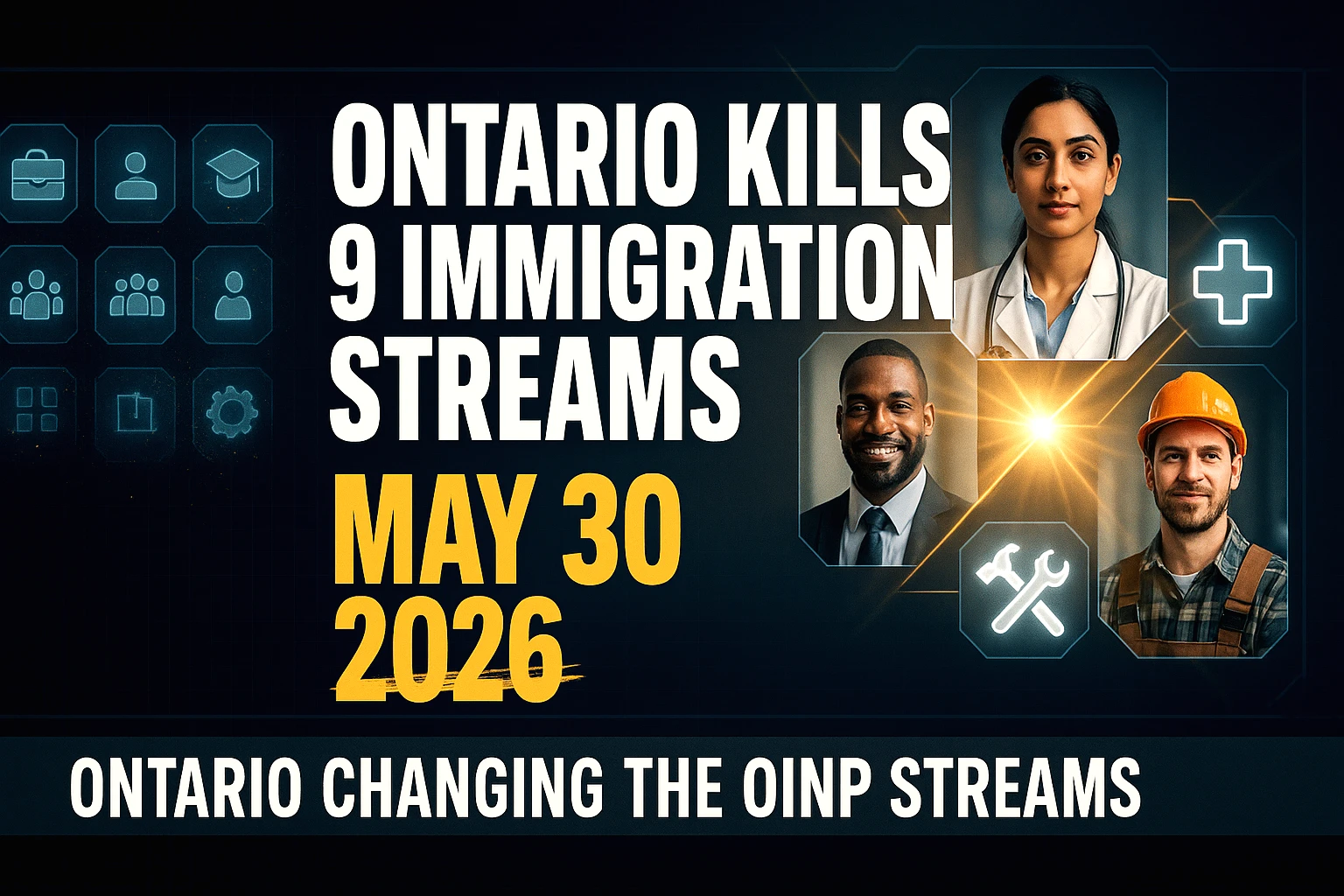
Ontario's immigration system faces complete restructuring as all existing pathways end May 30, 2026
On This Page You Will Find:
- Critical deadline details - why May 30, 2026 changes everything for your application
- Complete breakdown of all 9 eliminated immigration pathways and who's affected
- Insider analysis of the new employer-driven system replacing current streams
- Emergency action steps for current applicants facing program uncertainty
- Expert predictions on which new pathways will open and when to apply
Summary:
Ontario just dropped a bombshell that will reshape immigration for millions of hopeful newcomers. Starting May 30, 2026, all nine existing Ontario Immigrant Nominee Program streams disappear forever - replaced by a completely redesigned system targeting specific labor shortages. With over 180,000 applications flooding in last year but only 9,750 nominations available, plus rampant fraud forcing government action, this overhaul was inevitable. Current applicants face critical decisions in the coming months, while future candidates must prepare for stricter employer-driven requirements. Here's everything you need to know about Ontario's immigration revolution and how to position yourself for success in the new reality.
🔑 Key Takeaways:
- All 9 current OINP streams end permanently on May 30, 2026 - no extensions or delays
- New system prioritizes employer job offers and targets healthcare/skilled trades shortages
- Applications before May 30 likely processed under current rules, but no official guarantee
- Future applicants need registered employer sponsors to qualify for most pathways
- Four new consolidated streams expected: Employer Job Offer, Healthcare Priority, Entrepreneur, and Exceptional Talent
Maria Rodriguez refreshed her email for the hundredth time that morning, hoping for news about her Ontario immigration application. Instead, she found an announcement that made her heart sink: Ontario was eliminating every single immigration pathway she'd been counting on.
If you're like Maria - one of thousands planning to immigrate to Ontario - this news probably feels devastating. But here's what immigration experts aren't telling you: this massive overhaul might actually create better opportunities for the right candidates.
Let me walk you through exactly what's happening, why Ontario made this drastic decision, and most importantly, how you can adapt your immigration strategy to succeed in the new system.
The Complete Elimination: All 9 Streams Disappearing Forever
On May 30, 2026, Ontario will permanently revoke every existing Ontario Immigrant Nominee Program (OINP) stream through amendments to the Ontario Immigration Act. This isn't a temporary pause or program review - it's a complete structural demolition.
Here are the nine categories being eliminated:
Employer Job Offer Streams:
• Foreign Worker Stream
• International Student with Job Offer Stream
• In-Demand Skills Stream
Human Capital Streams: • Master's Graduate Stream • Ph.D. Graduate Stream • Human Capital Priorities Stream • French-Speaking Skilled Worker Stream • Skilled Trades Stream
Business Stream: • Entrepreneur Stream
Each of these pathways has helped thousands of immigrants build new lives in Ontario. The Master's Graduate stream alone has been a lifeline for international students, while the Skilled Trades stream addressed critical construction and manufacturing shortages.
But here's what's really happening behind the scenes: Ontario received a staggering 180,000 OINP applications in 2024 but could only nominate 9,750 candidates. That's a 95% rejection rate, creating massive backlogs and crushing disappointment for applicants who waited months or years for decisions.
The Real Reason Behind This Dramatic Overhaul
You might wonder why Ontario would eliminate successful programs that bring in skilled workers. The answer involves three critical problems that made this overhaul inevitable.
Problem #1: Massive Application Overload With 180,000 applications chasing fewer than 10,000 nomination spots, Ontario's immigration system became a lottery rather than a strategic selection process. Processing times stretched beyond reasonable limits, and qualified candidates faced years of uncertainty.
Problem #2: Widespread Fraud Epidemic Immigration consultant Manan Gupta revealed that fraud has become endemic "across the country, from coast to coast." Applications routinely contain falsified work records, fabricated credentials, and fake job offers. The current system's vulnerability to fraud undermines program integrity and wastes resources investigating suspicious applications.
Problem #3: Critical Labor Shortage Mismatch Despite processing thousands of applications, Ontario still faces 132,000 healthcare job vacancies and 87,000 unfilled skilled trades positions. The current points-based system selects candidates who score well on paper but doesn't guarantee they'll fill actual labor market needs.
These aren't minor adjustments - they're fundamental flaws requiring complete system redesign.
What's Actually Coming: The New Four-Stream System
Based on December 2025 consultations with employers and immigration lawyers, Ontario plans to replace the nine eliminated streams with four consolidated pathways designed around real-time labor market needs.
Stream #1: Unified Employer Job Offer This combines the current Foreign Worker, International Student with Job Offer, and In-Demand Skills streams into a single pathway with two tracks. The key difference? Employers must actively register with the OINP Director before submitting job offers, creating accountability and reducing fraudulent applications.
Stream #2: Priority Healthcare Stream Given Ontario's 132,000 healthcare job vacancies, this dedicated pathway will fast-track nurses, doctors, personal support workers, and other critical healthcare professionals. Expect expedited processing and potentially lower qualification thresholds for in-demand medical roles.
Stream #3: Redesigned Entrepreneur Stream The new business immigration pathway will likely require higher investment thresholds and more stringent job creation commitments. Ontario wants entrepreneurs who'll build businesses that employ Ontarians, not passive investors seeking residency.
Stream #4: Exceptional Talent Stream This pathway targets individuals with extraordinary abilities in technology, research, arts, or other high-value sectors. Think of it as Ontario's answer to federal programs targeting top global talent.
Critical New Employer Requirements That Change Everything
Starting May 30, 2026, the biggest change affects how employers participate in Ontario immigration. Under the new system:
Mandatory Employer Registration: Every employer offering jobs to immigration candidates must register with the OINP Director before submitting applications. This registration process will likely include business verification, labor market impact assessments, and ongoing compliance monitoring.
Pre-Approved Job Offer System: Employers can't simply offer jobs to foreign workers and hope for approval. They must submit eligible job offers into the system and receive approval before candidates can apply for nomination.
Enhanced Accountability: Registered employers face ongoing obligations to report on hired nominees, demonstrate genuine job creation, and maintain compliance with employment standards. Violations could result in registration suspension or permanent program exclusion.
What this means for you: if you're planning to immigrate through an employer job offer, you'll need to find companies already registered with the new system or willing to complete the registration process. This significantly narrows your employer options but should reduce competition from fraudulent applications.
What Happens to Current Applicants: The Gray Zone
Here's the question keeping thousands of applicants awake at night: what happens to applications already in the system when May 30, 2026 arrives?
Ontario hasn't provided official confirmation, but Canadian administrative law suggests applications submitted before May 30 should be processed under the rules in effect when submitted. This principle protects applicants from retroactive policy changes that could unfairly disadvantage them.
However (and this is crucial), Ontario could theoretically transfer pending applications to the new system if they determine it's in the public interest. Government agencies have broad discretion in managing program transitions.
If you have a pending application:
• Document your submission date and all supporting materials
• Monitor official OINP communications for transition announcements
• Consider consulting an immigration lawyer if your application faces unusual delays
• Prepare backup plans in case your application gets transferred to new requirements
If you're planning to apply soon: • Submit complete applications well before May 30, 2026 • Ensure all documentation meets current stream requirements • Don't wait for "better" opportunities under the new system - bird in hand principle applies here
Emergency Action Plan: What You Must Do Now
Depending on your situation, here's your strategic roadmap for navigating this transition:
For Current Applicants:
- Document everything - save confirmation emails, submission receipts, and all correspondence
- Stay informed - monitor OINP announcements for transition details
- Prepare alternatives - research federal programs or other provincial nominees as backup options
- Consider legal consultation - if your application faces unusual circumstances or delays
For Future Applicants (Applying Before May 30, 2026):
- Act immediately - don't wait for more information that might never come
- Choose the strongest stream - focus on categories where you clearly meet requirements
- Prepare complete applications - incomplete submissions risk delays past the deadline
- Secure employer support early - if you need job offers, start networking now
For Long-Term Planners:
- Research employer registration - identify companies likely to register under the new system
- Build targeted skills - focus on healthcare, skilled trades, or exceptional talent development
- Consider alternative provinces - British Columbia, Alberta, and other provinces offer different pathways
- Monitor federal changes - Express Entry and other federal programs continue operating
The Bigger Picture: Why This Matters Beyond Ontario
Ontario's dramatic overhaul signals a broader shift in Canadian immigration policy. Federal programs are also moving toward employer-driven selection and targeted labor market needs rather than general points-based systems.
This trend affects your long-term immigration strategy because:
Skills-Based Immigration Is Declining: The era of immigrating based purely on education, language skills, and work experience is ending. Future programs prioritize specific job offers and targeted occupations over general qualifications.
Employer Relationships Become Critical: Success increasingly depends on building relationships with Canadian employers willing to navigate immigration processes. Networking, Canadian work experience, and industry connections matter more than ever.
Regional Needs Drive Selection: Provinces want immigrants who'll stay and fill local labor shortages, not those who'll move to Toronto or Vancouver after landing. Demonstrating commitment to specific regions becomes essential.
Preparing for Success in the New Reality
While Ontario's announcement creates uncertainty, it also opens opportunities for candidates who adapt quickly to the new requirements.
Focus on High-Demand Occupations: Healthcare professionals, skilled tradespeople, and technology workers will likely find easier pathways under the new system. If you're in these fields, the changes might actually improve your chances.
Build Canadian Connections: Start networking with Ontario employers in your field now. Attend virtual industry events, join professional associations, and build relationships that could lead to job offers under the new employer-driven system.
Develop Exceptional Skills: The new Exceptional Talent stream rewards individuals with extraordinary abilities. Consider pursuing advanced certifications, research publications, or other achievements that demonstrate exceptional capability.
Consider Alternative Pathways: Don't put all your immigration hopes on Ontario. Research federal Express Entry, other Provincial Nominee Programs, and alternative immigration pathways that might better suit your situation.
What Immigration Experts Are Really Saying
Behind closed doors, immigration consultants are telling clients that Ontario's overhaul was inevitable and necessary. The current system's problems - massive backlogs, rampant fraud, and labor market mismatches - required dramatic solutions.
Many experts believe the new system will actually work better for qualified candidates because:
• Reduced fraud means legitimate applications face less competition
• Employer registration creates more reliable job offer processes
• Targeted streams focus on actual labor market needs rather than arbitrary point thresholds
• Streamlined pathways should reduce processing times for approved applications
However, they also warn that the transition period will create significant uncertainty and stress for applicants caught between systems.
Your Next Steps: Making Smart Decisions in Uncertain Times
The key to navigating Ontario's immigration overhaul is staying flexible while taking decisive action where possible.
If you're eligible for current streams: Submit complete applications well before May 30, 2026. Don't wait for more information about the new system - apply under current rules while you still can.
If you're planning future applications: Start building relationships with potential employers and developing skills aligned with Ontario's labor market priorities. Focus on healthcare, skilled trades, technology, or exceptional talent development.
If you're exploring alternatives: Research other provinces and federal programs that might offer better pathways for your situation. Ontario isn't the only route to Canadian permanent residency.
Remember: immigration policy changes create winners and losers. The candidates who succeed are those who adapt quickly, stay informed, and take strategic action despite uncertainty.
Ontario's immigration revolution represents the biggest structural change in decades, but it's also an opportunity to build a more effective, targeted system that benefits both immigrants and the province. Your job is positioning yourself to succeed in that new reality.
The countdown to May 30, 2026 has begun. How you use the time between now and then could determine whether this change becomes your immigration opportunity or obstacle.
