
Ontario shuts down all immigration pathways overnight - here's what we know so far about what is coming
On This Page You Will Find:
- Complete breakdown of Ontario's immigration program shutdown and what it means for your application
- Detailed analysis of the 5 proposed replacement streams with specific eligibility requirements
- Strategic advice for positioning yourself under the new system before it launches
- Timeline insights and what to do if you're caught in the transition period
- Expert predictions on which streams will launch first and offer the best chances
Summary:
Ontario just pulled the plug on every single provincial immigration pathway without warning, leaving thousands of hopeful immigrants in limbo. On May 30, 2026, all Ontario Immigrant Nominee Program (OINP) streams officially closed, but here's the twist – the province revealed their replacement plan six months earlier. Five new streams are coming, including a game-changing healthcare pathway that doesn't require a job offer and an "exceptional talent" stream for innovators and creatives. If you're planning to immigrate to Ontario, understanding these proposed changes could be the difference between getting your application in early or waiting years for another opportunity.
🔑 Key Takeaways:
- All existing OINP streams closed on May 30, 2026, with no immediate replacements
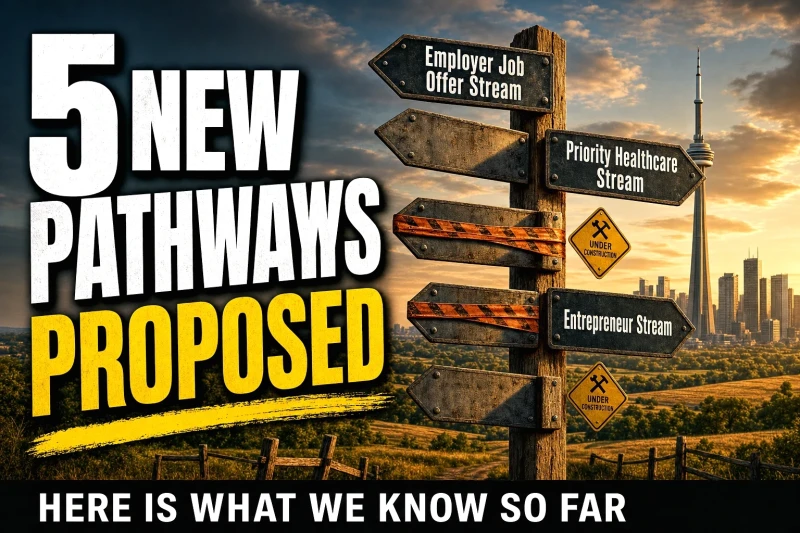
- Five new streams proposed: two employer job offer tracks, healthcare priority, entrepreneur, and exceptional talent pathways
- Healthcare professionals may qualify without job offers under the new Priority Healthcare stream
- Applications submitted before closure will still be processed under old rules
- New streams could launch with little notice due to regulatory changes
Picture this: You've spent months preparing your Ontario immigration application, gathering documents, and planning your move to Canada's most populous province. Then suddenly, every pathway closes overnight. This isn't a hypothetical scenario – it's exactly what happened to thousands of prospective immigrants when Ontario revoked all its Provincial Nominee Program (PNP) streams in one sweeping regulatory change.
But before you panic, there's a silver lining. Ontario didn't just slam the door shut; they've been quietly designing a completely new immigration system. The question is: will these changes work in your favor?
What Actually Happened to Ontario's Immigration System
On May 30, 2026, Ontario implemented scheduled legislative changes that invalidated every single immigration stream under the Ontario Immigrant Nominee Program (OINP). This wasn't a surprise attack – the province had been telegraphing these changes since December 2025, when they released detailed proposals for replacement streams.
The timing tells a story. Ontario published their consultation document on December 3, 2025, closed public feedback on January 1, 2026, and then implemented the shutdown five months later. This suggests the province knew exactly what they were doing and had been planning this overhaul for quite some time.
Here's what this means for you: if you submitted an application before May 30, 2026, you're safe. Ontario has committed to processing all applications "in accordance with the eligibility requirements in place at the time of application." However, if you were planning to apply under the old system, those doors are now permanently closed.
The Five New Proposed Immigration Streams: Your Complete Guide
Employer Job Offer Stream: TEER 0-3 Track (Skilled Workers)
This proposed stream represents Ontario's commitment to attracting skilled professionals, with a clear preference for candidates already working in the province. The three-part eligibility framework focuses on wage levels, work experience, and education.
Wage Requirements: Your job offer must meet the median wage for your specific occupation in Ontario. However, recent graduates from eligible Ontario institutions (within two years) get a significant advantage – they can qualify with offers at the low-wage level. This creates a clear pathway for international students who've invested in Ontario education.
Work Experience Options: The province offers three distinct pathways to meet experience requirements:
- Six months of Ontario work experience in your job offer occupation with the same employer
- Two years of experience in your job offer occupation within the past five years (from anywhere)
- A valid professional license in good standing with the relevant regulatory body
Education Flexibility: Here's where it gets interesting. If you have six months of Ontario work experience with your employer, you don't need to meet any minimum education requirement. This could be huge for skilled workers who've proven themselves on the job but lack formal credentials.
Candidates without that six-month Ontario experience would need a post-secondary credential, requiring an Educational Credential Assessment (ECA) for non-Canadian credentials.
Employer Job Offer Stream: TEER 4-5 Track (Essential Workers)
This track specifically targets workers in occupations requiring high school education and on-the-job training – think retail supervisors, food service workers, and skilled trades helpers.
The eligibility is more straightforward but requires deeper commitment: you need at least nine months of work experience in your job offer occupation with the same Ontario employer, plus meeting minimum language requirements.
The selection strategy here is particularly smart. Rather than accepting all applications, Ontario plans to use targeted draws focusing on occupations facing labor shortages. This means your chances depend not just on meeting requirements, but on whether your occupation is in demand when draws occur.
Priority Healthcare Stream: The Game-Changer
This might be the most revolutionary change in the entire proposal. For the first time, regulated healthcare professionals could qualify for Ontario nomination without a job offer.
The key requirement is simple but powerful: you need valid professional registration with an Ontario regulatory body. The proposal hints that recent graduates finalizing their registration might also qualify, though details remain unclear.
Examples of eligible professionals include:
- Registered nurses and nurse practitioners
- Medical technologists
- Laboratory specialists
- Other regulated healthcare professionals
For healthcare workers frustrated by job offer requirements in other provinces, this could represent a massive opportunity. The challenge will be obtaining that professional registration while living outside Ontario.
Entrepreneur Stream: Business Innovation Focus
The new Entrepreneur stream replaces the previous OINP Entrepreneur category with a more flexible approach targeting two specific scenarios:
New Business Pathway: Foreign nationals who have established and are actively operating a new business in Ontario. This suggests you'd need to be already running operations, not just planning them.
Business Succession Pathway: Those who have purchased and now operate an existing Ontario business. This opens doors for immigrants looking to take over established operations rather than starting from scratch.
The shift from planning to operating suggests Ontario wants entrepreneurs who've already proven their commitment and capability, rather than those with just business plans and investment capital.
Exceptional Talent Stream: Beyond Traditional Employment
This stream targets high achievers in academia, innovation, science, technology, and creative sectors – essentially anyone whose contributions fall outside traditional job-offer pathways.
Qualifying achievements include:
- Significant academic publications or research contributions
- Prestigious national or international awards
- Recognized innovations with measurable impact
- Notable artistic or creative works
The assessment would be qualitative, focusing on your contributions and potential impact on Ontario. This could be perfect for researchers, artists, tech innovators, and academic professionals who bring unique value but don't fit traditional employment categories.
Special Considerations and Flexibilities
Construction Trades Pathway
The proposal includes a unique flexibility for construction workers: union support could replace the traditional permanent, full-time job offer requirement. This recognizes the reality of how construction employment actually works and could open significant opportunities for skilled trades workers.
Regional and Occupational Targeting
Ontario plans to invite candidates by region, occupation, or other criteria to address specific employer needs. This means your location within Ontario and your specific occupation could significantly impact your chances during selection draws.
Strategic Positioning for the New System
If You're Already in Ontario: Your position is strong, especially if you're working in your intended occupation. The emphasis on Ontario work experience in multiple streams gives you a significant advantage over offshore candidates.
If You're an International Student: The reduced wage requirements for recent Ontario graduates create a clear pathway. Focus on gaining relevant work experience in your field while completing your studies.
If You're a Healthcare Professional: Start the professional registration process immediately. Even if the Priority Healthcare stream isn't finalized, having valid registration positions you perfectly when it launches.
If You're Offshore: Consider whether gaining Ontario work experience (through temporary programs) might be worth the investment, given the advantages it provides across multiple streams.
Timeline and What Comes Next
Ontario has been notably silent about launch dates, final eligibility criteria, or operational details. However, the regulatory changes give the immigration minister authority to create new streams without full regulatory amendments, meaning announcements could come with shorter notice than previously required.
The province has directed interested parties to "stay tuned to the program updates page for any further announcements." Given that the consultation closed on January 1, 2026, and the old streams closed on May 30, 2026, the gap suggests Ontario is taking time to refine their approach based on stakeholder feedback.
Preparing for an Uncertain Timeline
While waiting for official announcements, focus on elements you can control:
Document Preparation: Gather educational credentials, work experience letters, and language test results. These will be required regardless of which stream launches first.
Professional Development: If you're targeting the healthcare or skilled worker streams, work on obtaining relevant certifications or improving your qualifications.
Ontario Connections: Build relationships with Ontario employers, professional associations, or educational institutions. These connections could prove valuable when streams launch.
Language Improvement: Strong English or French skills will likely benefit you across all streams.
The Bigger Picture: Why Ontario Made This Change
This overhaul reflects Ontario's evolving economic needs and lessons learned from previous immigration programs. The consolidation from multiple employer streams into two tracks suggests the old system was too complex. The addition of a no-job-offer healthcare stream addresses critical labor shortages in that sector.
The Exceptional Talent stream recognizes that innovation and creativity don't always fit traditional employment models. This could position Ontario to compete more effectively with other jurisdictions for high-value immigrants who might otherwise choose other provinces or countries.
What This Means for Your Immigration Journey
Ontario's immigration reset creates both uncertainty and opportunity. While the immediate closure of all streams disrupts existing plans, the proposed replacements appear more targeted and potentially more efficient.
The key is positioning yourself strategically while maintaining flexibility. The healthcare stream could change opportunities for medical professionals, while the consolidated employer streams might actually simplify the process for most workers.
Most importantly, Ontario's willingness to completely overhaul their system demonstrates their commitment to making immigration work better for both the province and applicants. When these new streams launch, they'll likely reflect lessons learned from years of program operation and stakeholder feedback.
Your next step is staying informed and prepared. Monitor Ontario's official announcements, continue building your qualifications, and consider how these proposed changes align with your immigration goals. The wait might be frustrating, but the new system could offer better pathways than what came before.
