
Canada suspends immigration documents for three African nations amid Ebola outbreak concerns
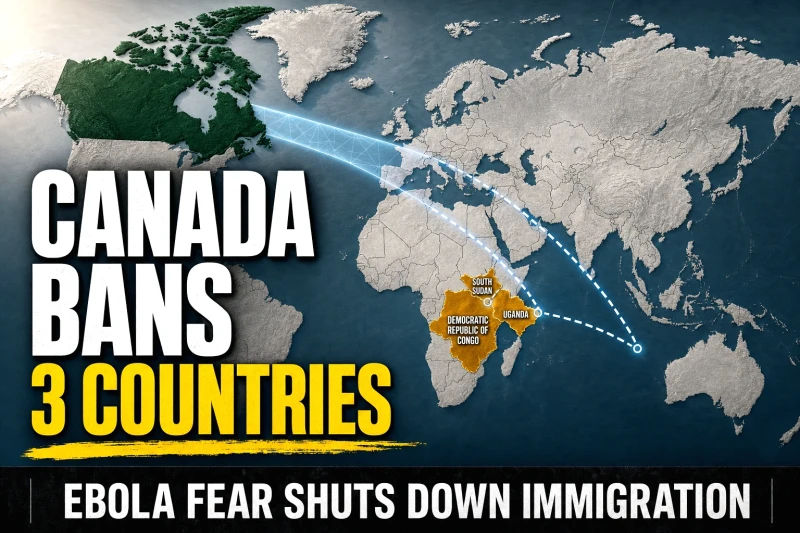
Canadian border officials implement 90-day suspension affecting Uganda, Democratic Republic of Congo, and South Sudan as health authorities monitor Ebola outbreak spread
On This Page You Will Find:
- Complete breakdown of the 90-day immigration suspension affecting Uganda, DRC, and South Sudan
- Specific documents suspended and who's affected by these emergency measures
- Health outbreak data driving Canada's unprecedented border response
- Travel volume statistics and quarantine requirements for returning residents
- Timeline of when restrictions begin and what happens to pending applications
Summary:
Canada has implemented an immediate 90-day suspension of all immigration documents for residents of Uganda, Democratic Republic of Congo, and South Sudan, effective May 27, 2026. This unprecedented measure affects approximately 350 weekly travelers and suspends permanent residence visas, work permits, study permits, and even previously approved eTAs. The decision comes as an Ebola outbreak spreads across the region, with 105 confirmed cases in DRC and 7 in Uganda. All returning Canadian residents from these countries now face mandatory 21-day quarantine, while new immigration applications are completely paused until late August.
🔑 Key Takeaways:
- Immigration documents for Uganda, DRC, and South Sudan suspended for exactly 90 days starting May 27, 2026
- Even approved visas, eTAs, work and study permits are temporarily invalid for travel to Canada
- 350 people per week typically travel from these countries to Canada (40% reduction expected)
- Mandatory 21-day quarantine required for all returning residents who visited affected regions
- Applications paused but not cancelled - processing will resume after the 90-day period
Maria Santos refreshed her email for the fifth time that Tuesday morning, waiting for her Canadian work permit approval. As a healthcare worker from Kampala planning to start her new job in Toronto next month, she had no idea that within hours, her immigration dreams would be put on hold for at least three months.
At 11:59 p.m. EDT on May 27, 2026, Canada implemented one of its most sweeping immigration suspensions in recent history, affecting three African nations and hundreds of weekly travelers.
What Documents Are Suspended
The suspension affects virtually every pathway to enter Canada from the three designated countries. Here's exactly what's been paused:
| Suspended Immigration Documents: | Document Type | Status | Processing |
|---|---|---|---|
| Permanent Residence Visas | Suspended for 90 days | Paused | |
| Temporary Residence Visas | Suspended for 90 days | Paused | |
| Electronic Travel Authorizations (eTAs) | Suspended for 90 days | Paused | |
| Study Permits | Suspended for 90 days | Paused | |
| Work Permits | Suspended for 90 days | Paused |
Even if you received approval before May 27, your document won't allow entry to Canada during this 90-day period. This means someone who got their visa approved on May 26 cannot use it until the suspension lifts in late August.
The Health Crisis Behind the Decision
The numbers driving this dramatic response paint a concerning picture of disease spread across Central and East Africa.
| Current Ebola Outbreak Statistics: | Country | Confirmed Cases | Deaths (Confirmed) | Suspected Cases | Suspected Deaths | Affected Provinces |
|---|---|---|---|---|---|---|
| Democratic Republic of Congo | 105 | 10 | 906 | 223 | Ituri, North Kivu, South Kivu | |
| Uganda | 7 | 1 | Not specified | Not specified | Border regions | |
| South Sudan | Monitoring status | Not specified | Not specified | Not specified | At-risk areas |
What makes this outbreak particularly concerning is the virus strain involved. According to the World Health Organization, this outbreak involves the Bundibugyo virus - a species of Ebola for which no licensed vaccine or specific treatment currently exists.
"The severity of Ebola disease and the evolving international situation, including the FIFA World Cup 2026" prompted Canada's precautionary approach, according to government officials.
Travel Impact by the Numbers
The suspension will significantly disrupt established migration patterns between Canada and these African nations.
| Weekly Travel Volume from Affected Countries: | Metric | Number | Percentage |
|---|---|---|---|
| Total weekly travelers to Canada | 350 people | 100% | |
| Canadian citizens/permanent residents | ~210 people | 60% | |
| Foreign nationals | ~140 people | 40% | |
| Expected reduction in passengers | ~140 people | 40% |
The majority of these travelers typically arrive through three major Canadian airports:
- Montreal-Pierre Elliott Trudeau International Airport
- Toronto Pearson International Airport
- Vancouver International Airport
This means Canadian airports can expect roughly 140 fewer passengers per week from these regions - a significant operational change that affects everything from customs processing to health screening protocols.
Mandatory Quarantine Requirements
Beyond the immigration suspension, Canada has implemented strict quarantine measures for anyone who has recently visited the affected regions.
| Quarantine Details: | Requirement | Details | Duration |
|---|---|---|---|
| Effective Date | May 30, 2026 | Until August 29, 2026 | |
| Quarantine Period | 21 days | Regardless of symptoms | |
| Who's Affected | All travelers from DRC, Uganda, South Sudan | Previous 21 days | |
| Exemptions | None | Even asymptomatic individuals |
This quarantine requirement applies to:
- Canadian citizens
- Permanent residents
- Foreign nationals (who can still enter)
- Persons registered under the Indian Act
The 21-day period aligns with Ebola's maximum incubation period, ensuring anyone who might have been exposed shows symptoms before potentially spreading the disease.
Application Processing During Suspension
If you're wondering what happens to your pending application or whether you should submit a new one, here's what immigration officials have clarified:
Application Status During Suspension:
- Pending applications: Paused, not cancelled - processing resumes after 90 days
- New applications: Can be submitted but won't be processed until suspension lifts
- Applications for people already in Canada: Continue to be processed normally
- Mid-travel exemptions: People already in transit when suspension began are exempt
This "pause, not ban" approach means your application won't be rejected or require resubmission. However, you'll need to wait approximately three months longer than originally anticipated for a decision.
International Context and Coordination
Canada's response aligns with similar measures taken by other countries, particularly the United States, which implemented comparable restrictions the week before Canada's announcement.
The timing also reflects concerns about the upcoming FIFA World Cup 2026, which Canada is co-hosting with the United States and Mexico. Large international sporting events can accelerate disease transmission if proper precautions aren't in place.
What This Means for Affected Travelers
If you're from Uganda, DRC, or South Sudan with Canadian immigration plans, here's your immediate action plan:
For Current Applicants:
- Don't panic - your application isn't cancelled
- Expect delays of exactly 90 days beyond normal processing times
- Keep documentation current - ensure your supporting documents don't expire during the pause
- Monitor updates - immigration policies can change as health situations evolve
For Future Applicants:
- You can still apply - submissions are accepted but processing is paused
- Consider timing - factor in the additional 90-day delay
- Prepare thoroughly - use this time to strengthen your application
- Stay informed - follow official Immigration, Refugees and Citizenship Canada (IRCC) announcements
Looking Ahead: When Normal Processing Resumes
The 90-day suspension period means normal immigration processing for these three countries should resume around August 25, 2026. However, several factors could influence this timeline:
- Outbreak containment: Successful disease control could lead to earlier lifting
- Spread to new areas: Additional countries could be added to the suspension list
- International coordination: Changes in U.S. or other allied country policies
- World Cup preparations: Additional health measures as the tournament approaches
The suspension represents Canada's most significant immigration response to a health crisis since the early days of the COVID-19 pandemic. While disruptive for thousands of potential travelers, it demonstrates the government's commitment to protecting public health while maintaining clear, time-limited restrictions rather than indefinite bans.
For Maria Santos and hundreds of others like her, the next few months will require patience and flexibility as Canada balances immigration goals with public health priorities. The key message from immigration officials remains clear: this is a temporary pause, not a permanent barrier, to achieving Canadian immigration dreams.
