
Canada streamlines entry for pre-screened Indonesian and Malaysian travelers
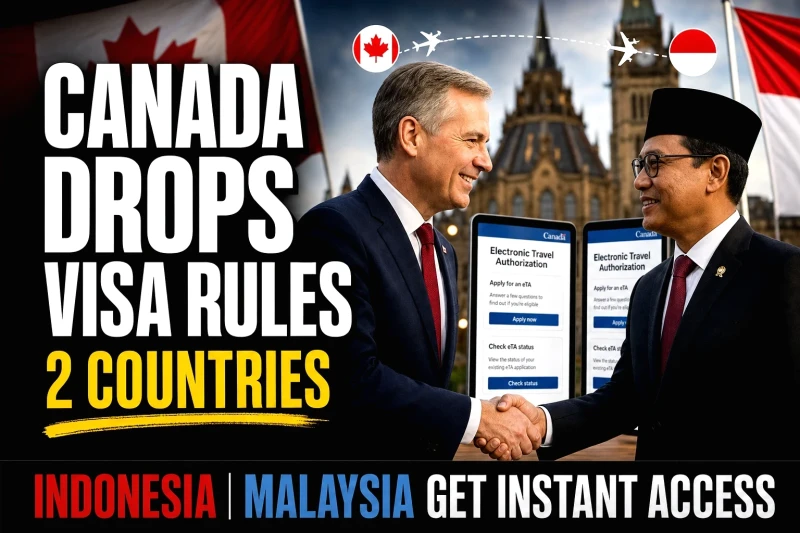
Eligible travelers from Indonesia and Malaysia can now use electronic travel authorization instead of traditional visas when flying to Canada
On This Page You Will Find:
- Immediate eligibility requirements for the new electronic travel authorization (eTA) system
- Step-by-step breakdown of who qualifies and who still needs traditional visas
- Strategic economic implications of Canada's Indo-Pacific partnership expansion
- Comparison of Malaysian and Indonesian passport rankings globally
- Security measures that remain in place despite streamlined entry process
Summary:
Canada has revolutionized travel for eligible Indonesian and Malaysian citizens by replacing traditional visa requirements with a streamlined electronic travel authorization (eTA) system. This game-changing policy applies to travelers who have held a Canadian temporary resident visa within the last 10 years or currently possess a valid US non-immigrant visa. The move represents Canada's strategic push to strengthen economic ties with the rapidly growing Indo-Pacific region while maintaining robust security screening. For qualifying travelers, this means faster processing times, reduced paperwork, and enhanced business opportunities between these Southeast Asian nations and Canada.
🔑 Key Takeaways:
- Eligible Indonesian and Malaysian citizens can now use eTA instead of traditional visas when flying to Canada
- Qualification requires either a Canadian temporary resident visa from the last 10 years OR a current valid US non-immigrant visa
- Land, sea, and other transport methods still require visitor visas for all Indonesian and Malaysian citizens
- Security screening remains comprehensive through both eTA system and border controls
- This policy change supports Canada's broader Indo-Pacific economic strategy and trade diversification goals
Maria Sari refreshed her laptop screen for the third time, staring at the Canadian visa application portal. As an Indonesian software engineer who had studied in Toronto five years ago, she dreaded the lengthy visa process that had previously taken weeks and mountains of paperwork. But today, everything changed.
Canada has introduced a revolutionary shift in visa requirements that transforms how eligible travelers from Indonesia and Malaysia enter the country. Instead of navigating the traditional visa maze, qualifying individuals can now apply for an electronic travel authorization (eTA) – a streamlined process that recognizes their previous screening history.
Who Qualifies for the New eTA System
The eligibility criteria are surprisingly straightforward, targeting what Canadian officials call "known" travelers. You qualify for eTA if you're an Indonesian or Malaysian citizen who meets one of these conditions:
Previous Canada Experience: You've held a Canadian temporary resident visa (TRV) within the last 10 years. This recognizes that you've already been thoroughly vetted by Canadian immigration authorities.
Current US Visa Holders: You possess a valid US non-immigrant visa at the time of your eTA application. Since the United States maintains rigorous screening standards, Canada accepts this as sufficient pre-screening.
This targeted approach acknowledges that these travelers have already undergone comprehensive background checks by either Canadian or American authorities, making them lower-risk candidates for streamlined entry.
Important Limitations and Continued Requirements
Before you celebrate too enthusiastically, understand these critical restrictions:
Air Travel Only: The eTA system exclusively applies to travelers arriving by airplane. If you're planning to enter Canada by car, bus, train, or boat, you'll still need a traditional visitor visa regardless of your previous travel history.
Study and Work Permits Still Required: The eTA doesn't replace specialized permits. Students and workers must still apply for appropriate study or work permits, even if they qualify for eTA for general visits.
Comprehensive Security Screening Continues: Don't mistake streamlined processing for relaxed security. Eligible travelers face dual screening – first through the eTA system during application, then again at the Canadian border upon arrival.
Canada's Strategic Indo-Pacific Vision
This policy change isn't just about convenience – it's a calculated economic strategy. The Indo-Pacific region represents one of the world's fastest-growing economic zones, and Canada recognizes the enormous potential for trade diversification and investment attraction.
Indonesia and Malaysia serve as crucial economic partners for Canada in Southeast Asia. By removing bureaucratic barriers for business travelers and investors, Canada aims to strengthen commercial ties, support innovation partnerships, and create opportunities for Canadian businesses seeking global expansion.
The timing aligns perfectly with Canada's broader Indo-Pacific Strategy and deeper engagement with the Association of Southeast Asian Nations (ASEAN). Current negotiations for an ASEAN-Canada free trade agreement could benefit significantly from increased people-to-people connections facilitated by easier travel.
Global Passport Power Rankings
The visa policy change occurs against an interesting backdrop of passport strength disparities between the two nations:
Malaysian Passport Advantage: Malaysian citizens enjoy visa-free or visa-on-arrival access to 183 countries and territories, earning the 6th position globally according to the 2026 Henley Passport Index. This strong passport ranking reflects Malaysia's stable diplomatic relationships and economic standing.
Indonesian Passport Challenges: Indonesian citizens have visa-free or visa-on-arrival access to 70 countries and territories, ranking 63rd worldwide. This significant gap highlights why the Canadian eTA policy represents such a meaningful improvement for Indonesian travelers.
Enhanced Border Security Measures
Despite the streamlined application process, Canada hasn't compromised on security. The government has implemented strengthened screening protocols, expanded information sharing with international partners, and enhanced fraud detection systems.
These measures specifically target non-genuine travelers and protect the integrity of Canada's immigration and asylum systems. The dual-screening approach – through eTA and at the border – ensures that convenience doesn't come at the expense of national security.
Economic Impact and Business Opportunities
The policy change promises substantial economic benefits for all parties involved. Enhanced business travel facilitates investment flows, technology transfers, and partnership development between Canadian companies and their Southeast Asian counterparts.
For Canadian businesses, easier access to Indonesian and Malaysian markets through improved people-to-people connections could unlock new revenue streams. Conversely, Indonesian and Malaysian entrepreneurs gain simplified access to Canadian markets, potentially leading to increased foreign direct investment.
The streamlined process particularly benefits the technology sector, where rapid collaboration and face-to-face meetings often determine partnership success. With Southeast Asia's booming digital economy, Canadian tech companies stand to gain significantly from enhanced connectivity.
What This Means for Your Travel Plans
If you're an eligible Indonesian or Malaysian citizen, this change transforms your Canada travel experience. Instead of waiting weeks for visa processing, you can typically receive eTA approval within minutes or hours of application.
The electronic system eliminates the need for embassy visits, document submissions, and lengthy processing times that previously deterred spontaneous business trips or family visits. However, remember that eTA approval doesn't guarantee entry – final admission decisions remain with border officers upon arrival.
Plan ahead by ensuring your US visa remains valid throughout your intended stay, or verify that your previous Canadian visa falls within the 10-year eligibility window. Keep documentation readily available to demonstrate your qualification for eTA rather than traditional visa requirements.
Conclusion
Canada's introduction of eTA eligibility for qualified Indonesian and Malaysian travelers represents more than administrative convenience – it signals a strategic commitment to Indo-Pacific partnership development. By recognizing previous screening by trusted allies and streamlining entry for known travelers, Canada demonstrates sophisticated risk management while pursuing economic opportunities.
For eligible travelers, this change eliminates significant barriers to Canadian entry while maintaining robust security standards. As Canada continues expanding its Indo-Pacific engagement, similar policy innovations may emerge, further strengthening ties between these dynamic economic regions and creating new opportunities for collaboration, investment, and cultural exchange.
