
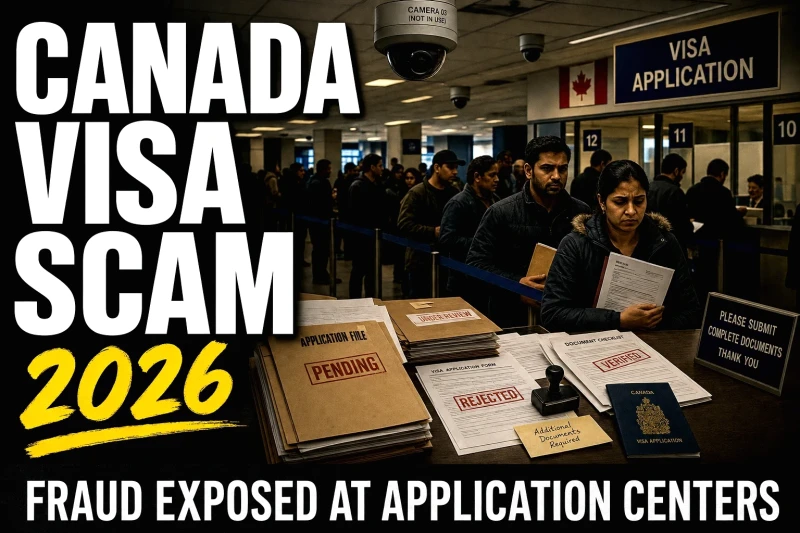
Canadian visa centers face massive fraud crisis affecting international applicants
On This Page You Will Find:
- Breaking details of massive fraud schemes targeting Canadian visa applicants worldwide
- How third-party resellers are exploiting desperate applicants for $250+ per appointment
- Critical security vulnerabilities and malware attacks affecting 164 visa centers globally
- Government's $725 million contract oversight failures exposed through internal documents
- Essential fraud detection steps every visa applicant must take to protect themselves
Summary:
Canadian visa application centers operated by VFS Global are facing an unprecedented fraud and security crisis in 2026, with internal government documents revealing systematic appointment reselling, malware attacks, and technical vulnerabilities across 164 centers worldwide. Third-party fraudsters are charging desperate applicants up to $250 Canadian per appointment, while the government has awarded over $725 million in contracts since 2012 with questionable oversight. One Canadian official described the situation as having "enough fraud to write a novel about," highlighting the urgent need for applicant vigilance and immediate government action to protect international visa seekers.
🔑 Key Takeaways:
- VFS Global operates 164 Canadian visa centers across 109 countries with over $725 million in government contracts since 2012
- Third-party fraudsters are charging applicants $250+ Canadian per person for basic passport submission appointments
- Malware attacks and technical vulnerabilities have compromised visa center operations, including significant outages in Russia
- Government officials admit fraud levels are so extensive "we could write a novel about all the fraud we are seeing"
- New penalties allow fines up to $1.5 million for those providing false information or misleading applicants
Maria Santos stared at her laptop screen in disbelief. After waiting months for her Canadian visa appointment in Manila, she discovered the only available slots were being sold by mysterious third parties for $250 – nearly half her monthly salary. What she didn't realize was that she'd become caught in a massive fraud network that Canadian officials are calling one of the most extensive security crises in the country's immigration history.
If you're planning to apply for a Canadian visa through overseas application centers, you're entering a system under siege. Internal government documents obtained through Access to Information requests have exposed shocking levels of fraud, security breaches, and technical failures that put every international applicant at risk.
The $725 Million Contract System Under Fire
The scope of Canada's visa application center network is staggering, but so are the problems plaguing it. Here's what the numbers reveal:
VFS Global Contract Overview (2012-2026)
| Contract Details | Amount | Operations |
|---|---|---|
| VF Worldwide Holdings Ltd. (VFS Global) | $725+ million | 128 visa centers |
| TT Visa Services (acquired by VFS 2017) | $45.9 million | 36 visa centers |
| Total Network Coverage | $770.9+ million | 164 centers across 109 countries |
| Contract Period | 2012 - March 2026 | Ongoing operations |
This massive financial commitment was supposed to streamline visa processing for millions of applicants worldwide. Instead, it's created a system vulnerable to exploitation at every level.
The Appointment Reselling Crisis That's Bankrupting Applicants
Here's where the fraud gets personal – and expensive. Canadian officials discovered that legitimate appointment slots are being systematically hijacked and resold at premium prices to desperate applicants.
How the Appointment Fraud Works
The scheme is devastatingly simple yet sophisticated:
Step 1: Block Booking Fraudsters use automated systems to reserve large blocks of appointment slots the moment they become available.
Step 2: Artificial Scarcity Legitimate applicants find no available appointments through official channels, creating panic and desperation.
Step 3: Premium Reselling Third parties offer these stolen appointments for approximately $250 Canadian per person – a fortune for applicants from developing countries.
Step 4: Deadline Pressure With Immigration, Refugees and Citizenship Canada (IRCC) deadlines looming, applicants feel forced to pay these inflated prices or risk losing their visa applications entirely.
The situation became so concerning that Canadian officials created fake accounts to test the booking system themselves – and experienced the same problems real applicants face daily.
Security Breaches That Compromise Your Personal Data
Beyond financial fraud, the visa center network faces serious cybersecurity threats that put applicant information at risk.
Major Security Incidents in 2024-2026
| Location | Incident Type | Impact | Timeline |
|---|---|---|---|
| Russia Operations | Internet Outage | Service disruption during Ukraine war | April 2024 |
| Russia VACs | Malware Attack | Confirmed cyber breach | April 2024 |
| Dhaka Center | Appointment Fraud | Mass reselling scheme | Ongoing 2024-2026 |
| Multiple Centers | Technical Vulnerabilities | System exploitation | Under investigation |
The malware attack on Russian visa centers is particularly concerning because it demonstrates how geopolitical tensions can directly impact visa processing security. When you submit personal documents and biometric data to these centers, you're trusting a system that has proven vulnerable to both external attacks and internal fraud.
Government Officials Sound the Alarm
The most damning evidence comes from internal communications between Canadian immigration officials. These aren't minor administrative hiccups – they're systemic failures that officials describe in stark terms.
One Canadian official preparing to visit the Dhaka center in February 2024 wrote: "We could write a novel about all the fraud we are seeing." This isn't bureaucratic exaggeration; it's a cry for help from frontline workers overwhelmed by the scale of fraudulent activity.
The fact that officials needed to create fake applicant accounts to understand the problems reveals how disconnected oversight had become from reality on the ground.
The Human Cost: Real Stories from Affected Applicants
While government contracts worth hundreds of millions make headlines, the real impact falls on individual applicants who can least afford it.
Consider the math for a family of four applying from Bangladesh:
- Official visa center fees: Standard government rates
- Fraudulent appointment fees: $250 × 4 people = $1,000 Canadian
- Average monthly salary in Bangladesh: $200-400 Canadian
This means families are paying 2-5 months of income just for the privilege of submitting their legitimate visa applications – money that goes directly to criminals, not the Canadian government.
How to Protect Yourself: Essential Fraud Prevention Steps
Minister Lena Metlege Diab announced a three-step approach in March 2026: "spot, stop and report." Here's how to implement this strategy:
Spot the Warning Signs
Red Flags That Indicate Fraud:
- Pressure to act immediately or "lose your chance"
- Requests for large cash payments outside official channels
- Guaranteed visa approval promises
- Appointment slots offered through unofficial websites
- Communication from non-government email addresses
- Requests to meet in unofficial locations
Stop Engaging with Fraudsters
What to Do When You Encounter Fraud:
- Never pay third parties for appointment slots
- Only use official IRCC and VFS Global websites
- Refuse any "guaranteed results" offers
- Don't provide personal information to unofficial sources
- Document all fraudulent communications
Report Suspicious Activity
How to Report Fraud:
- Contact IRCC directly through official channels
- Report to local law enforcement
- Document everything with screenshots and emails
- Share information with other applicants through legitimate forums
Government Response: New Penalties and Technical Measures
The Canadian government isn't just acknowledging these problems – they're implementing serious consequences for fraudsters.
New Anti-Fraud Measures (2026)
| Measure Type | Details | Maximum Penalty |
|---|---|---|
| Financial Penalties | For false information or misleading applicants | Up to $1.5 million |
| Technical Disruption | Systems to block appointment reselling | Ongoing implementation |
| Investigation Protocol | All credible fraud tips investigated | Case-by-case enforcement |
| Enhanced Monitoring | Improved oversight of VAC operations | Continuous monitoring |
These penalties represent a significant escalation in the government's response, but implementation remains the critical challenge.
What This Means for Your Visa Application Timeline
Understanding the fraud landscape helps you plan more effectively:
Realistic Timeline Expectations:
- Official appointment booking: Plan 2-4 weeks ahead minimum
- Document preparation: Allow extra time for verification
- Processing delays: Factor in potential system disruptions
- Backup planning: Have alternative appointment dates ready
Budget Protection Strategies:
- Only budget for official government fees
- Set aside emergency funds for legitimate delays, not fraud payments
- Research official fee structures before starting your application
- Connect with other legitimate applicants for support and information sharing
The Path Forward: Systemic Reform Needed
While individual vigilance is essential, the scale of these problems demands systemic solutions. The Canadian government faces several critical decisions:
Contract Oversight Reform: The $725+ million investment in VFS Global operations requires enhanced monitoring and accountability measures.
Technology Upgrades: Current booking systems are clearly vulnerable to exploitation and need fundamental security improvements.
Alternative Service Models: Consider whether centralized private contractors are the best approach for such critical immigration services.
International Cooperation: Work with local governments to prosecute fraud networks operating in their territories.
Your Next Steps: Navigating the System Safely
Despite these challenges, legitimate visa applications continue to be processed successfully. Here's your action plan:
Before You Apply:
- Research current conditions at your local VAC through official channels
- Connect with recent successful applicants for realistic timelines
- Bookmark only official government websites
- Set up fraud alerts for your financial accounts
During Your Application:
- Document every official interaction
- Report any suspicious contact immediately
- Use only official communication channels
- Keep copies of all legitimate receipts and confirmations
If You Encounter Problems:
- Don't panic or make rushed payments
- Contact IRCC directly for guidance
- Report fraud attempts to authorities
- Seek support from legitimate applicant communities
The Canadian visa application system is under unprecedented strain from fraud and security challenges, but awareness and vigilance can help you navigate these waters safely. Remember: legitimate immigration processes don't require premium payments to third parties or guaranteed results promises.
Your dream of coming to Canada shouldn't be derailed by criminals exploiting a vulnerable system. Stay informed, stay cautious, and always verify information through official channels. The Canadian government is working to address these systemic issues, but your personal vigilance remains your best protection against becoming another fraud statistic.
The road to Canadian immigration may be more complex than ever, but with proper preparation and awareness, you can avoid the traps that have ensnared thousands of other hopeful applicants. Your future in Canada is worth protecting – don't let fraudsters steal that opportunity from you.
